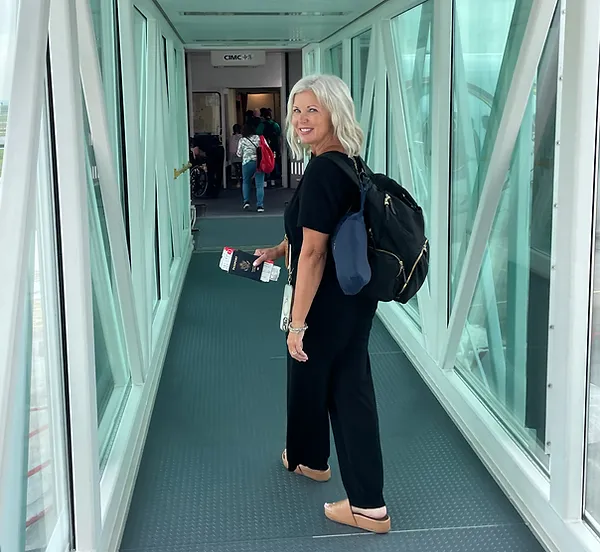


Worried about Tenerife airport safety? This guide compares Tenerife North vs South airports, explains how to check aircraft types, airline safety, and shares tips for nervous flyers- plus how to get from the airport without breaking the bank.
Why We Were Glad We Chose the South
On our very first flight into Tenerife, we didn’t know what to expect. As the plane began its descent, a friendly woman sitting near us leaned over and said, “You made the right choice flying into the south.”
She explained that Tenerife North is notorious for fog, weather delays, and diversions, while Tenerife South usually means sunnier skies and smoother operations. That quick conversation stuck with us, and after staying awhile here, we’ve seen just how true it is.
Since sharing our Tenerife adventures online, we’ve received countless messages from nervous flyers asking:
“Which Tenerife airport should I fly into?”
“Is the North airport safe?”
“How can I check what type of plane I’ll be on?”
This guide breaks it all down. Here’s what you’ll find:
- The differences between Tenerife North (TFN) and Tenerife South (TFS) airports
- How to check aircraft type and airline safety ratings before booking
- Why U.S. travelers always connect through Europe
- Practical tips for nervous flyers (with a link to our full toolkit)
- How to get from the airport cheaply using Tenerife’s bus system
Let’s get started. Here’s everything you need to know about Tenerife airport safety and flying into this beautiful island.
Tenerife’s Two Airports: What You Need to Know
Most travelers don’t realize Tenerife has two airports, and the one you choose can shape your entire experience.
Tenerife North Airport (TFN) “Los Rodeos”
Located near La Laguna and Santa Cruz, Tenerife North sits at a higher elevation and is surrounded by mountainous terrain. It mainly serves domestic and inter-island flights, often on smaller aircraft.
Quick facts:
- Location: ~11 km from Santa Cruz
- Weather: Prone to fog and low visibility, especially in winter and spring
- Best for: Travelers heading to the north of the island (e.g., Puerto de la Cruz)
- Typical aircraft: Regional jets and turboprops
Because of its geography, TFN can experience frequent weather-related disruptions like fog delays and occasional diversions. For anxious flyers, that unpredictability can be stressful, even though the airport meets the same strict EU safety standards as any other.
Insider tip: If you must fly into TFN, morning arrivals often have fewer fog issues than afternoon or evening flights.
Tenerife South Airport (TFS) “Reina Sofía”
Tenerife South was built in the late 1970s to solve those weather problems. Located at a lower elevation on the sun-drenched southern coast, TFS is now the island’s main international hub.
Quick facts:
- Location: Near Costa Adeje and Playa de las Américas
- Weather: More stable year-round
- Typical aircraft: Mid-sized jets like A320s and B737s
- Best for: International travelers and those staying in southern Tenerife
Why many travelers, especially nervous flyers, prefer TFS:
- Reliable weather: Fewer delays and diversions
- Larger aircraft: International routes typically use standard jets
- Closer to resorts: Most tourist hotspots are nearby
- More route options: Better connectivity through European hubs
Our experience: When we flew into TFS, the skies were blue and the landing was smooth. It’s the stress-free welcome you want at the end of a long travel day.
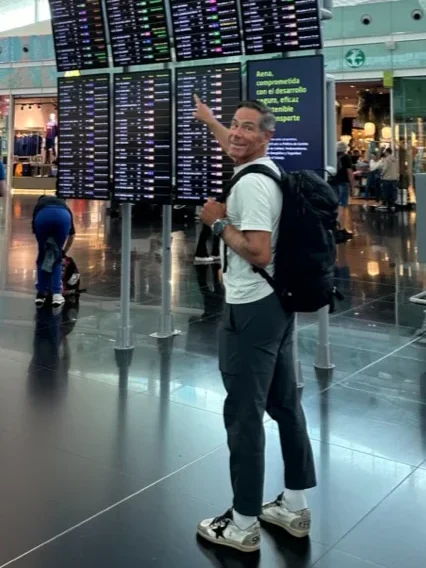
Which Tenerife Airport Is “Safer”?
The short answer: both airports are safe.
The longer answer: Tenerife South (TFS) usually offers a smoother, more predictable experience, especially for anxious travelers.
Here’s why:
- More stable weather: Less fog and wind shear
- Predictable approaches: Lower elevation and coastal location make for easier operations
- Bigger planes: International flights use standard jets, which many nervous flyers find more reassuring
- More backup options: TFS has more infrastructure to handle contingencies
Tenerife North isn’t unsafe. It’s just more likely to have operational delays. If you have a choice, pick TFS, especially if you’re a nervous flier.
How to Check Aircraft Type & Airline Safety Before You Book
If stepping onto a tiny commuter plane makes your heart race, here’s the good news: you can check the aircraft type before you book.
Here’s our go-to method:
Step 1: Find the Flight Number
We swear by Google Flights. Check out our full guide on using Google Flights HERE. Once you’ve narrowed down your flights, copy the flight number (for example, “IB3924”).
Step 2: Check Aircraft Type
Head to Flightradar24 or FlightAware and paste the flight number. You’ll see:
- Aircraft type (e.g., “Airbus A320” or “ATR 72”)
- Registration number
- Historical flight data
If you see A320, B737, or similar, you’re looking at a mid-sized jet. If you see ATR or Dash-8, it’s a smaller turboprop commuter aircraft.
Step 3: Check the Airline’s Safety Record
Go to AirlineRatings.com to see:
- Star safety ratings
- IOSA audit status
- Fleet age
- Incident history
Step 4: Pick What Feels Right for You
If smaller planes increase your anxiety, choose a routing that uses larger jets even if it means a different European connection. Feeling more comfortable is worth a slightly longer itinerary.
U.S. Travelers: You’ll Connect Through Europe
If you’re flying from the U.S., here’s a key fact: there are no direct flights from the U.S. to Tenerife.
You’ll always connect through Europe first; usually Madrid, Barcelona, Lisbon, London, Frankfurt, or Amsterdam before flying down to the Canary Islands.
That second leg (Europe to Tenerife) is where your airport and aircraft choice really matters. Always double-check if your connection lands at TFS (South) or TFN (North) before booking.
Example: The lady we met on our flight to Tenerife flew from Boston. She connected in Madrid and deliberately chose the flight that landed at TFS because it used a larger Airbus and had a better track record for on-time arrivals.
Tips for Nervous Flyers (from Personal Experience)
We’ve both had moments of white-knuckling the armrest during turbulence. Over time, though, we’ve built a toolkit that actually works.
Our favorite tips:
- Book flights on planes and airlines you trust. Larger jets often feel more stable.
- Pick seats over the wings. Less movement = calmer ride.
- Avoid caffeine and alcohol before the flight because they can make nerves worse.
- Learn the normal sounds of flying so they don’t catch you off guard.
- Use calming rituals like breathing exercises or playlists.
- Talk to the crew: letting them know you’re nervous often gets you extra reassurance.
For more in-depth tips, read our full post:
How to Overcome Your Fear of Flying and Actually Enjoy the Journey
Getting From the Airport Without Spending a Fortune
One of the best budget hacks in Tenerife is using the public bus. Taxis and Ubers from the airports can be surprisingly pricey, especially late at night.
From Tenerife South (TFS)
- Buses run frequently to Costa Adeje, Playa de las Américas, and Los Cristianos.
- Tickets cost just a few euros.
- Ideal if you’re staying in the south.
From Tenerife North (TFN)
- TITSA buses connect TFN to La Laguna, Santa Cruz, and other northern towns.
- There’s a direct inter-airport bus (about one hour, €5–7) if you need to transfer between TFN and TFS.
Check TITSA’s official website for routes and schedules.
Our tip: If you arrive late, verify bus times in advance. Even a short taxi from a bus stop is often cheaper than a full ride from the airport.
FAQs About Flying to Tenerife
Is Tenerife North Airport safe?
Yes. Both airports meet strict EU aviation safety standards. TFN just has more fog and weather disruptions.
Which airport is better for nervous flyers?
Tenerife South (TFS) has better weather, bigger planes, and more predictable operations.
How can I check what plane I’ll be on?
Use Flightradar24 or Google Flights to see the aircraft type before booking.
Are there direct flights from the U.S. to Tenerife?
No. All U.S. travelers must connect through a European hub first.
Is it easy to get to resorts from the airport?
Yes. Buses from TFS to the southern resorts are frequent and cheap. Taxis are convenient but more expensive.
Final Thoughts
Flying to Tenerife doesn’t have to be stressful. Once you understand the differences between the two airports, learn how to check aircraft and airline safety, and prepare with a few nervous flyer strategies, the journey becomes far less intimidating.
If you have a choice, Tenerife South (TFS) is the clear winner for smoother skies, bigger planes, and better weather. But whichever airport you use, a little preparation goes a long way.
Have questions or tips about flying to Tenerife? Share them in the comments below, we love hearing from fellow travelers.
Ready to plan your next adventure? Subscribe to our newsletter for flight deals, destination guides, and budget travel hacks that make full-time travel possible at any age.


