How to Run the Tour du Mont Blanc (TMB) in 4 Days, 3 Nights
The Tour du Mont Blanc had been on my bucket list for years.
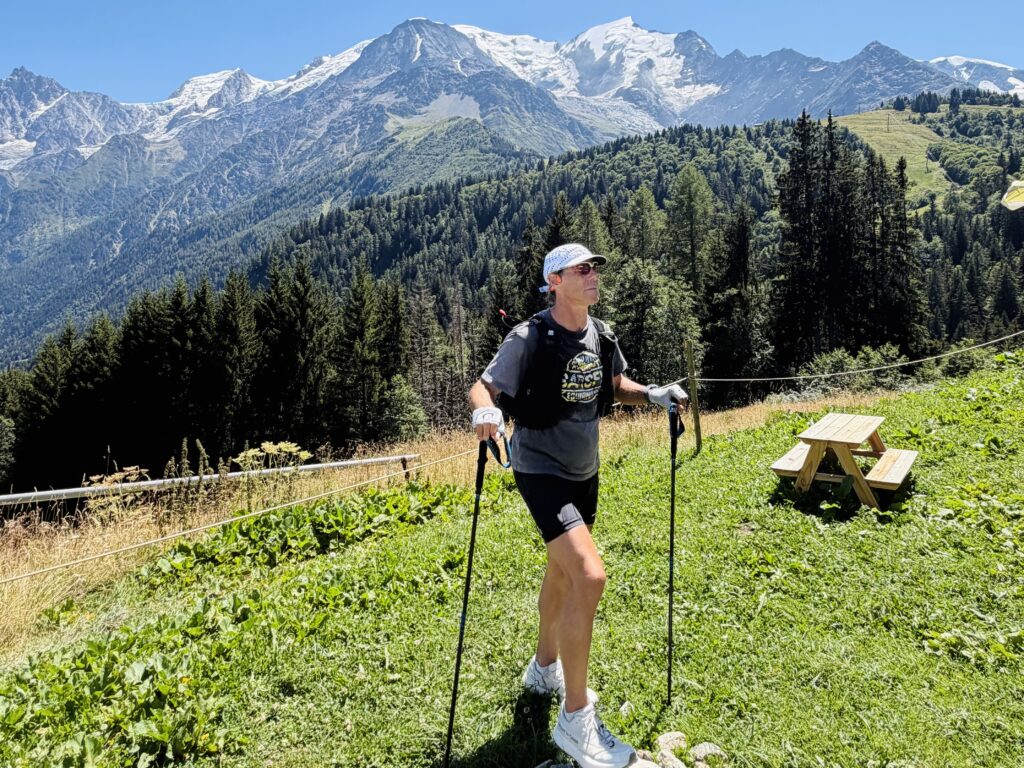
I’m an ultra-marathon runner and have spent a lot of time on trails, but there was something about the TMB that kept calling me back. I’m a huge fan of UTMB, and I’d watched runners tackle these same trails around Mont Blanc more times than I can count.
Running through three countries, climbing huge mountain passes, and spending several days surrounded by the Alps sounded like my kind of adventure.
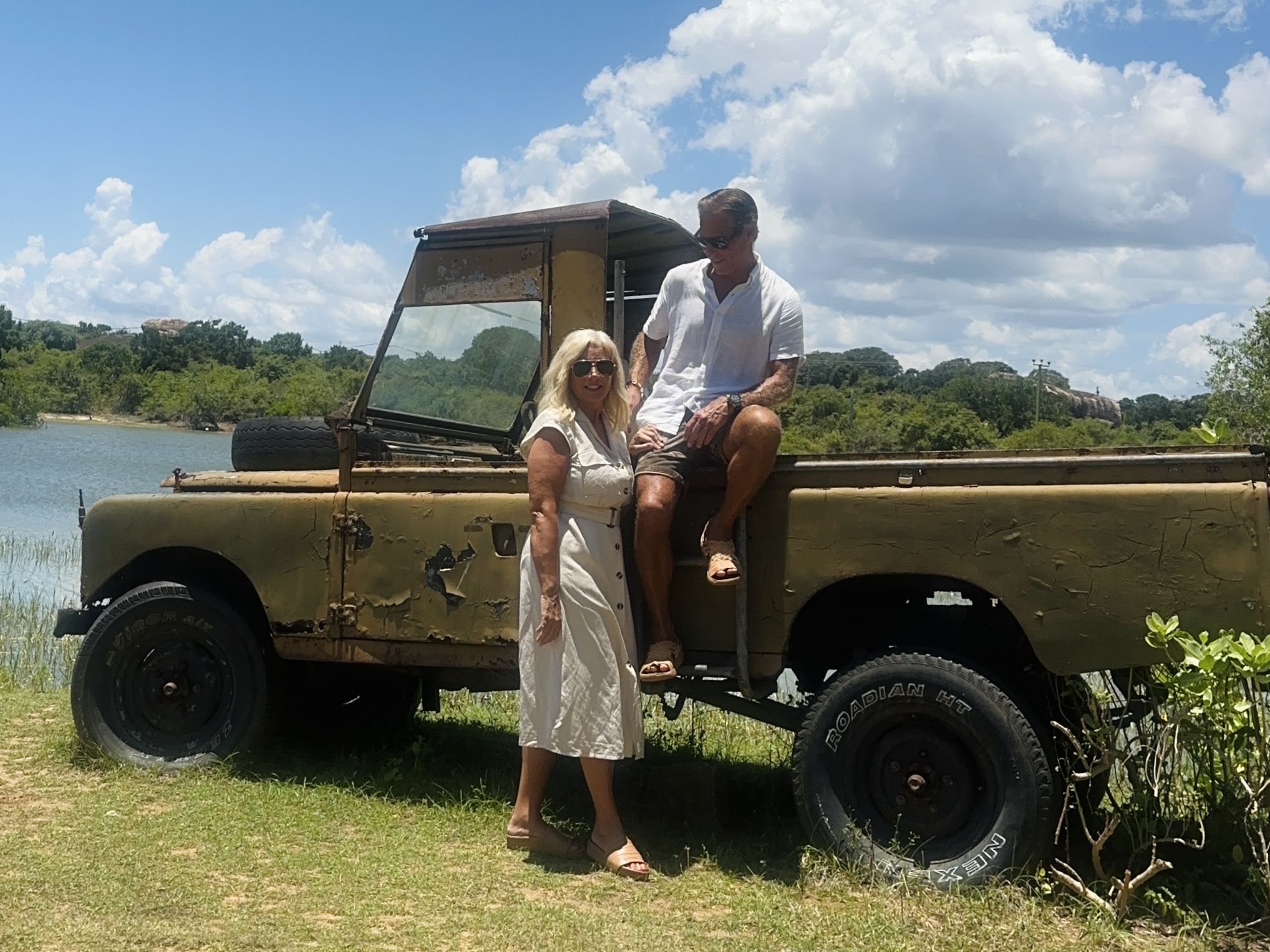
So when Shelly and I realized we’d be spending part of the summer in France, we both knew this was probably my chance.
Shelly was completely on board from the beginning. While I was figuring out mileage, elevation, routes, and where I could realistically stop each night, she helped me work through the logistics and encouraged me to go for it. Having her support made taking on something this big a whole lot easier.
There was just one problem.
I didn’t want to spend 8 to 11 days to hike the traditional Tour du Mont Blanc.
So I decided to see if I could do it in four.
I started in Chamonix, France, and set out to run and hike the Tour du Mont Blanc in four days and three nights, covering roughly 100 miles through France, Italy, and Switzerland before circling back into France.
And yes, I said run and hike.
Unless you’re an elite mountain runner, you’re probably not running every step of the TMB. Some of these climbs are steep, long, and relentless. I ran when the terrain allowed and power-hiked the big climbs, which is pretty standard in ultrarunning.
Over four days, I spent about 44 hours moving, climbed roughly 30,000+ feet, crossed three countries, ate an impressive amount of food, wore out my legs, and saw some of the best mountain scenery of my life.
It was hard. Really hard at times.
There were climbs that seemed to never end, descents that hurt more than the climbs, and weather that could change before I had time to pull out my jacket.
But then I’d come over a mountain pass and see glaciers stretching across the horizon, hear cowbells ringing in a valley below, or run into another tiny alpine village and remember exactly why I was there.
If you’re an experienced trail runner or ultrarunner wondering whether you can run the Tour du Mont Blanc in four days, the answer is yes.
Here’s exactly how I did it.
What Is the Tour du Mont Blanc?
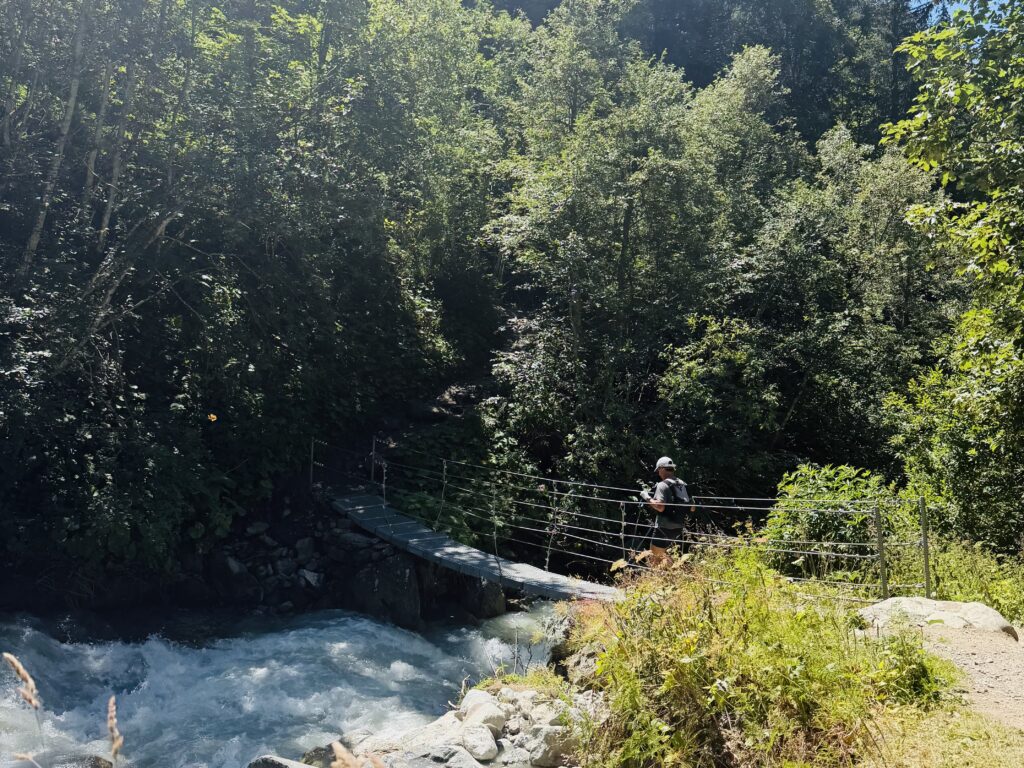
The Tour du Mont Blanc, or TMB, is one of the most famous long-distance hiking and trail running routes in Europe.
Instead of climbing Mont Blanc itself, the trail makes a complete circuit around the Mont Blanc massif, passing through France, Italy, and Switzerland along the way.
The classic Tour du Mont Blanc route is approximately 105 miles (170 kilometers), although your exact mileage will depend on the route and variants you take. It also includes around 30,000 to 33,000 feet of elevation gain, which is what makes covering the TMB in four days such a serious challenge.
Most people hiking the Tour du Mont Blanc take around 8 to 11 days.
I gave myself four.
Along the way, I ran and hiked past glaciers, waterfalls, forests, alpine meadows, mountain refuges, tiny villages, and more switchbacks than I care to count.
For a trail runner, it’s about as good as it gets.
My Tour du Mont Blanc Route at a Glance
- Distance: Approximately 100–105 miles (160–170 km)
- Elevation gain: Approximately 30,000+ feet (9,000+ meters)
- Countries: France, Italy, and Switzerland
- Time: 4 days, 3 nights
- Moving time: Approximately 44 hours
- Direction: Counterclockwise
- Starting point: Chamonix, France
- Finishing point: Les Houches, France
- Style: Self-guided trail run/hike
- Overnight stops: Les Contamines, Courmayeur, and Champex-Lac
One thing worth emphasizing: this is not a beginner TMB running itinerary.
Covering 20 to 30 mountainous miles for four consecutive days requires a solid endurance base and experience moving efficiently through mountain terrain.
My 4-Day Tour du Mont Blanc Running Itinerary
Day 1: Chamonix to Les Contamines
Distance: Approximately 20 miles (32 km)
I started early in Chamonix, with four very big days ahead of me.
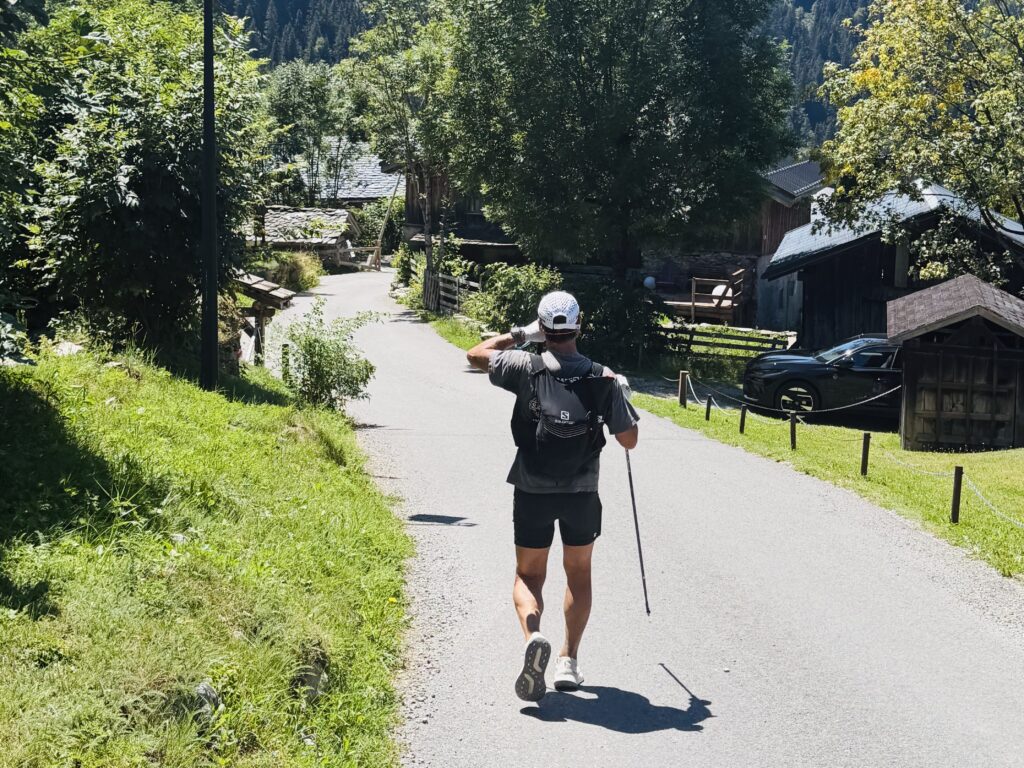
There isn’t much of a warm-up on the TMB. Before long, I was climbing out of the valley and heading toward Les Houches and the first real taste of what the next four days would look like.
Climb. Run. Descend. Repeat.
The first day took me through alpine forests and open meadows, past traditional mountain refuges and over Col de Voza, with some incredible views back toward the Mont Blanc massif.
Twenty miles might not sound too intimidating if you’re used to ultrarunning, but mileage on the TMB is different. You’re constantly gaining or losing elevation, and I figured out pretty quickly that measuring these days by mileage alone doesn’t tell the whole story.
By late afternoon, I reached Les Contamines-Montjoie, where I spent my first night.
I was tired, hungry, and already completely hooked.
Day 2: Les Contamines to Courmayeur
Distance: Approximately 28 miles (45 km)
Day two was one of the hardest days of my Tour du Mont Blanc run, but it also gave me some of my favorite moments of the entire route.
I left Les Contamines early and started the long climb toward Col du Bonhomme before continuing toward Col de la Seigne, where the TMB crosses the border from France into Italy.
This was the kind of day I had pictured when I dreamed about running the TMB.
Big mountains. Huge views. Long stretches of trail. Glaciers in the distance.
And then there’s the surreal moment when you realize you just crossed from one country into another on your own two feet.
Coming over Col de la Seigne was especially memorable. I reached the area around sunrise, and seeing the mountains light up around me was one of those moments that made me forget, at least temporarily, how tired my legs were.
Then came the descent toward Courmayeur, Italy.
And it just kept going.
By the time I reached Courmayeur after nearly 30 miles, I was ready for food, a shower, clean clothes, and a bed.
Fortunately, Shelly had taken the bus from Chamonix to Courmayeur and was waiting for me.
She brought fresh clothes, another pair of running shoes, more supplies, and, most importantly, a huge bowl of spaghetti.
There aren’t many meals I’ve appreciated more.
Day 3: Courmayeur to Champex-Lac
Distance: Approximately 27 miles (43 km)
The next morning, I left Courmayeur early and started climbing again.
The section above Courmayeur was spectacular. The trail climbs high above the valley with massive mountains and glaciers across the way, and it was one of those places where I constantly wanted to stop and look around.
Eventually, I made my way toward Grand Col Ferret, one of the biggest climbs on my route and the crossing point from Italy into Switzerland.
This was a tough climb, especially with two long days already in my legs.
But reaching the top and looking into Switzerland made it worth the work.
The landscape gradually changed as I descended. The Swiss side of the TMB brought rolling green valleys, farms, forests, cowbells, and small villages that looked almost too perfect to be real.
By evening, I reached Champex-Lac, Switzerland.
Of the three places I stayed during my four-day TMB run, this was my favorite.
Champex-Lac sits around a beautiful alpine lake surrounded by mountains and forests. After spending all day moving through the mountains, being able to shower, eat a real dinner, and sit beside that lake felt pretty luxurious.
I didn’t need much convincing to go to bed early.
I still had around 30 miles to go.
Day 4: Champex-Lac to Les Houches
Distance: Approximately 30 miles (48 km)
The final day was long.
Really long.
At this point, I could feel three days and roughly 75 miles in my legs, and I knew I still had another big mountain day ahead of me.
But knowing I was going to finish the Tour du Mont Blanc that day gave me a little extra motivation.
I worked my way through forests, mountain villages, climbs, and descents before eventually crossing from Switzerland back into France.
As I got closer to the Chamonix Valley, the whole experience started to sink in.
I’d wanted to do this for years, and now I was almost finished.
Those final miles weren’t fast or particularly pretty from a running standpoint. My legs were done.
But I kept moving until I finally reached Les Houches and completed the route.
Four days. Three nights. Three countries. About 100 miles and more than 30,000 feet of climbing.
Done.
And yes, every sore muscle was worth it.
My 4-Day TMB Mileage Breakdown
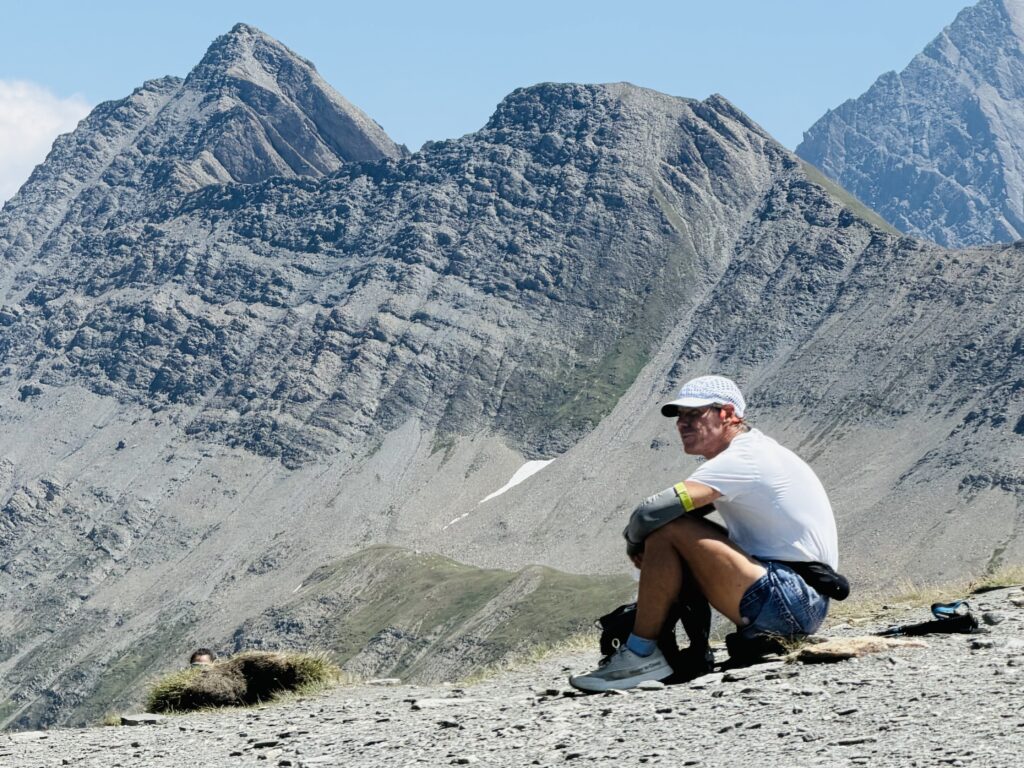
| Day | Tour du Mont Blanc Route | Approximate Distance |
|---|---|---|
| Day 1 | Chamonix to Les Contamines | 20 miles |
| Day 2 | Les Contamines to Courmayeur | 28 miles |
| Day 3 | Courmayeur to Champex-Lac | 27 miles |
| Day 4 | Champex-Lac to Les Houches | 30 miles |
| Total | Tour du Mont Blanc | Approximately 105 miles |
Keep in mind that GPS mileage can vary on the TMB depending on the exact trails and variants you follow.
Where I Stayed While Running the Tour du Mont Blanc
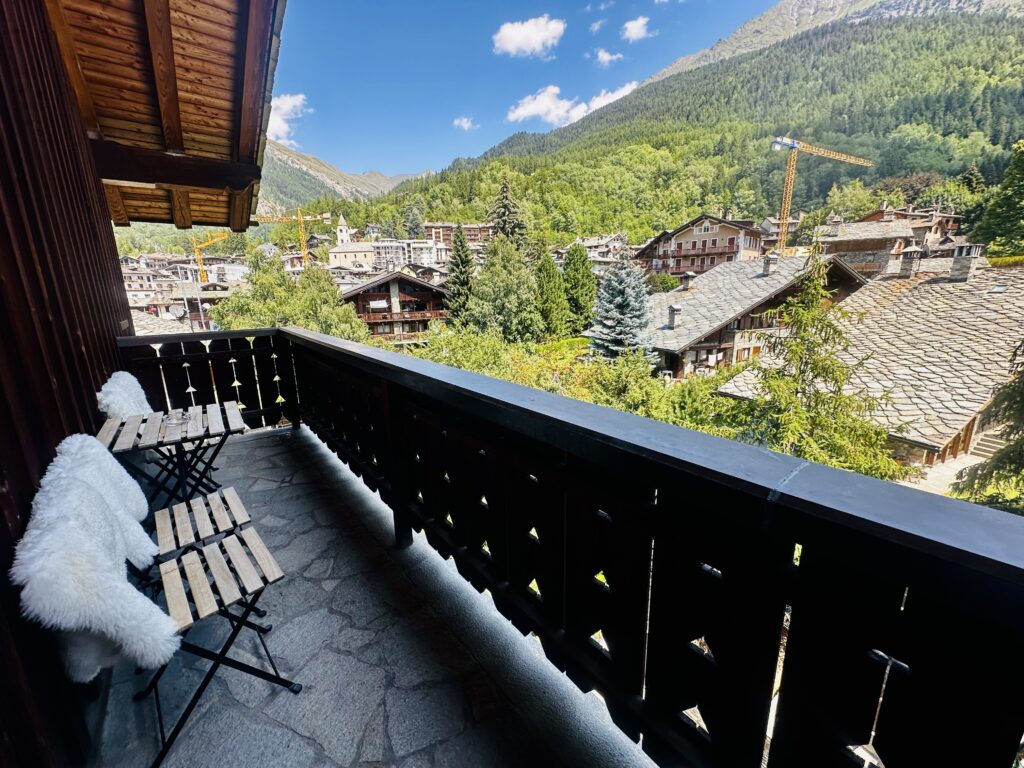
One decision I made early was that I wanted to stay in Airbnbs and hotels rather than the mountain refuges that are popular along the Tour du Mont Blanc.
TMB Refuges vs. Hotels and Airbnbs
Refuges are one of the most common types of Tour du Mont Blanc accommodation, and they’re generally much more affordable than the Airbnbs and hotels I chose.
If you’re trying to complete the Tour du Mont Blanc on a budget, they’re definitely worth looking into.
The catch is that popular TMB refuges can fill up very early, especially during the busy summer season, so you’ll want to make reservations well in advance.
Amenities also vary.
Depending on the refuge, you may find:
- Dorm-style accommodations
- Shared bathrooms
- Private rooms
- Breakfast and dinner
- Packed lunches
- Showers
- Charging facilities
Some also require you to bring your own sleeping bag liner.
Normally, carrying a sleeping bag liner wouldn’t be a big deal. But when you’re trying to run and hike roughly 100 miles in four days, you start looking at every single thing going into your pack and asking, “Do I really want to carry this over 30,000 feet of elevation gain?”
For me, the answer was no.
I was trying to complete the TMB fast and light, and I also knew that after running 20 to 30 miles each day, I’d appreciate a comfortable bed, a hot shower, and a little more privacy.
There isn’t a right or wrong way to do it. If budget is your priority and you want the traditional TMB experience, staying in refuges can be a great choice.
If comfort, privacy, and packing as light as possible matter more, hotels and Airbnbs may be worth the extra cost.
Whichever option you choose, book your Tour du Mont Blanc accommodations early. Once you commit to a four-day itinerary, you need a bed in some pretty specific places each night.
You don’t want to finish a 28-mile mountain day and discover your bed is another five miles down the trail.
Night 1: Les Contamines-Montjoie, France
My first overnight stop was Les Contamines-Montjoie, a beautiful French alpine village surrounded by mountains and meadows.
This was a practical place to end Day 1 because there are restaurants, bakeries, grocery stores, pharmacies, hotels, and other services within the village.
I stayed in an Airbnb located right off the TMB trail. It was comfortable, convenient, and large enough that a group of four or five runners could easily share it.
See the Airbnb I stayed at in Les Contamines
For a four-day TMB itinerary, location matters. The last thing I wanted after running all day was to add unnecessary mileage just to get to my bed.
Night 2: Courmayeur, Italy
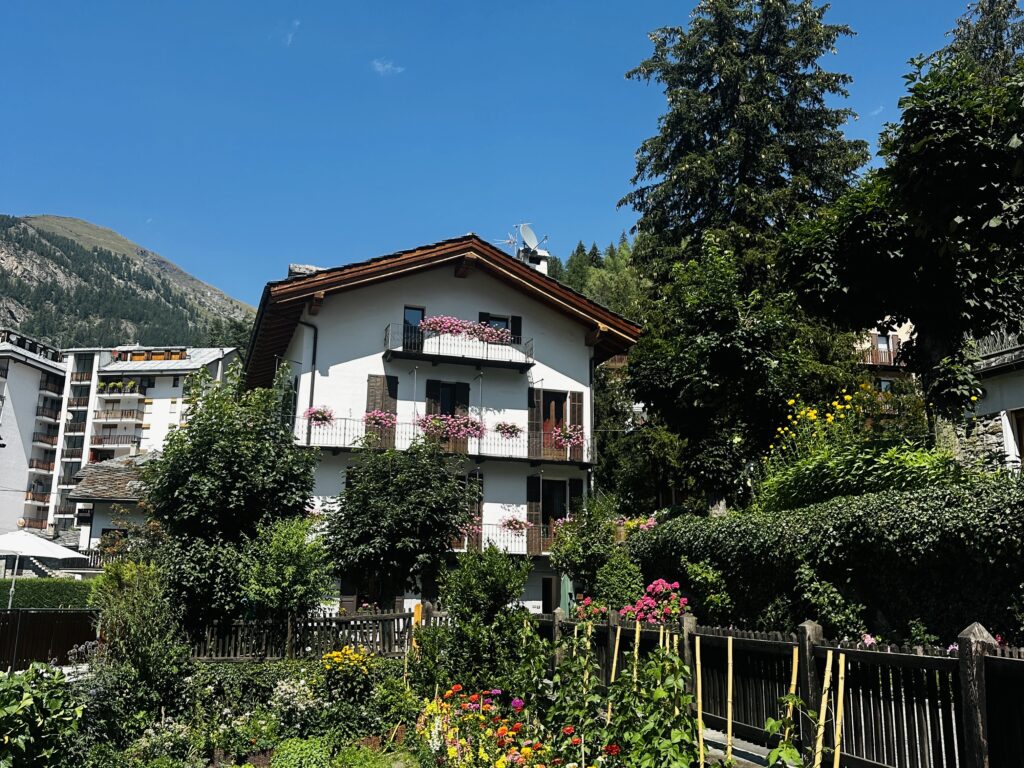
Arriving in Courmayeur after crossing from France into Italy felt like a reward.
Courmayeur is a proper mountain town, so this is one of the easiest places along the TMB to restock supplies, replace gear, find a pharmacy, eat a big meal, or just sit down and recover for a few hours.
This is where Shelly met me after taking the bus from Chamonix.
Having her there was a huge help. She brought me clean clothes, fresh running shoes, more fuel, and food.
See the hotel I stayed at in Courmayeur
Breakfast was included with my stay, but I wanted to get back on the TMB before normal breakfast hours. The hotel packed breakfast for me to take with me, and I picked it up the night before.
That little detail made an early start much easier.
Night 3: Champex-Lac, Switzerland
Champex-Lac was easily my favorite overnight stop.
The village sits beside a clear alpine lake surrounded by mountains and forest, and after three days of running, it was an incredible place to finish the day.
My hotel was right off the TMB trail, which again made the logistics simple.
See the hotel I stayed at in Champex-Lac
Breakfast was included here too, and the hotel packed mine to go because I was leaving early.
I also ate dinner at the hotel restaurant, which meant I didn’t have to wander around looking for food after a 27-mile day.
At that point, convenience was pretty high on my priority list.
Water on the Tour du Mont Blanc
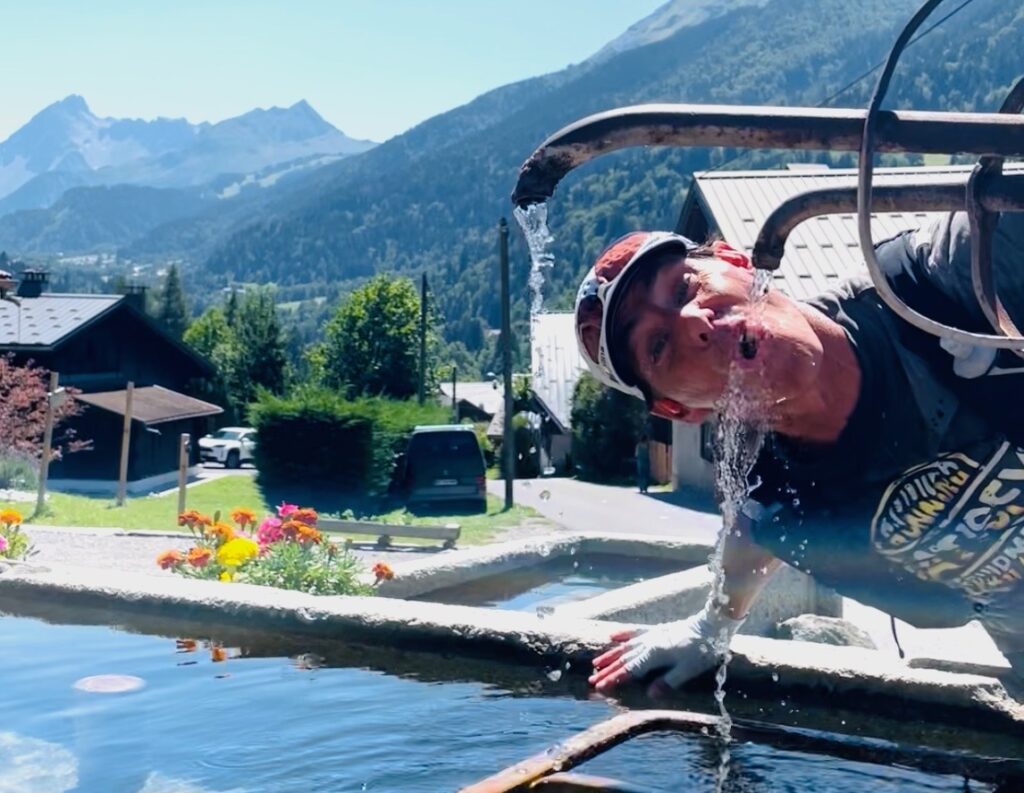
One thing I worried about before starting the TMB was how much water I’d need to carry.
It turned out to be much less of an issue than I expected.
There were many places to refill water along the Tour du Mont Blanc. I found public water fountains in towns and villages along the route, as well as streams and other natural water sources in the mountains.
That meant I didn’t have to carry a huge amount of water at one time, which was important because I was trying to keep my running vest as light as possible.
How I Carried and Filtered Water on the TMB
I carried soft flasks, and two of them had built-in water filters.
I highly recommend carrying some type of filtration system if you’re running or hiking the TMB. I used the filters whenever I filled from a stream or other natural source rather than assuming mountain water was automatically safe to drink.
And that mountain water was one of the simple pleasures of the trip.
Stopping after a long climb to refill with cold, fresh water was unbelievably satisfying. There were times when it felt almost as good as reaching the top of the pass.
Having regular opportunities to refill also meant I could carry less water between stops and save weight.
When you’re running and hiking roughly 100 miles with more than 30,000 feet of climbing, every little bit helps.
I wouldn’t assume every fountain or stream will always be running, though. Water availability on the TMB can change depending on the season and conditions.
My advice is to look at your route ahead of time, take advantage of reliable refill opportunities when you find them, and carry a filter so you have more options along the way.
What I Ate and How I Fueled While Running the TMB
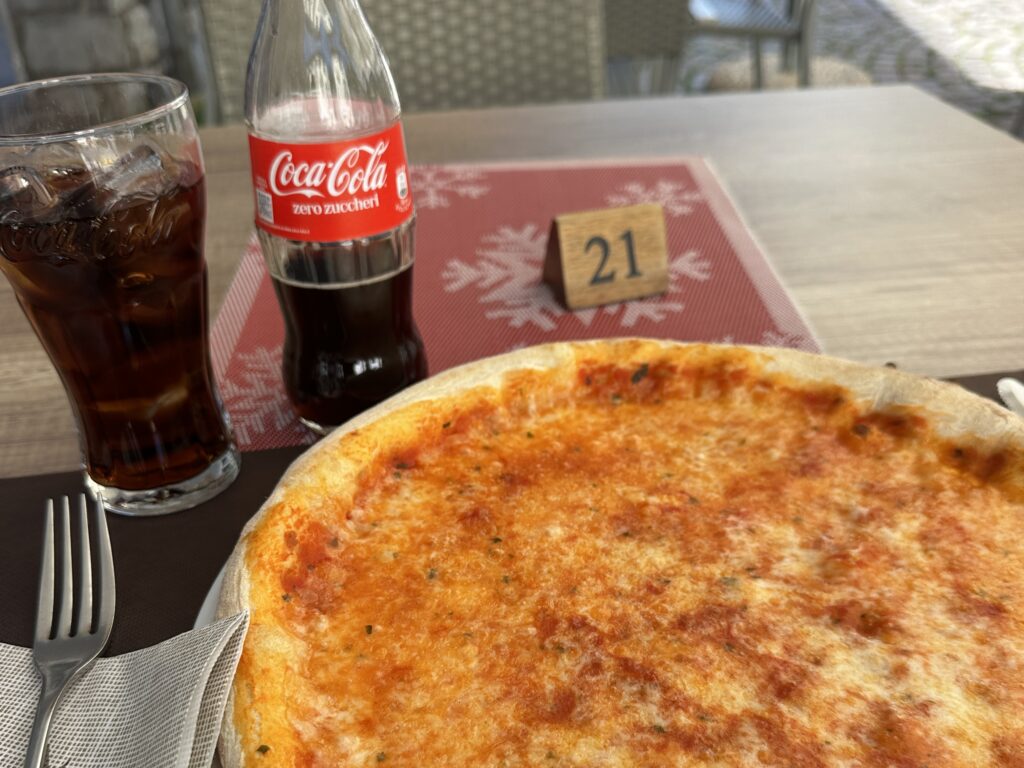
Fueling was a huge part of being able to keep moving for four long days.
With roughly 44 hours of total moving time, I knew I couldn’t rely on a few gels and a big dinner at the end of the day.
I needed to keep calories, carbohydrates, fluids, and electrolytes coming in consistently.
Sports Nutrition I Carried
I carried a combination of:
- Neversecond gels
- Precision Fuel & Hydration gels
- Näak gels that Shelly and I bought in Chamonix
- Salt tablets
- CLIF Bars
- Bobo’s snacks
- Candy
But one of the great things about running the Tour du Mont Blanc is that you don’t necessarily have to carry four days’ worth of food on your back.
Eating and Resupplying Along the TMB
The trail passes through villages and mountain communities, so whenever the timing worked, I stopped and bought real food.
Pastries became a favorite.
So did Coke.
An ice-cold Coke after spending hours climbing through the mountains tasted ridiculously good.
For bigger meals, I kept things pretty simple:
- Sandwiches
- Pizza
- Pasta
Basically, I wanted carbohydrates and plenty of them.
After a full day in the mountains, I wasn’t worried about having a fancy meal. I wanted food, and I wanted a lot of it.
Eat Before You’re Hungry
My approach to fueling for the Tour du Mont Blanc was to eat early and eat often rather than waiting until I felt hungry.
When you’re moving for 10 or more hours in a day, getting behind on calories can make the rest of the day a whole lot harder.
I also liked having a mix of options.
Gels were easy when I was moving quickly or climbing, but after hours of sweet sports nutrition, a sandwich, pastry, or slice of pizza sounded a whole lot better.
Flavor fatigue is real.
Being able to buy food along the TMB was another reason I could keep my pack relatively light. I carried enough nutrition to get me safely between reliable resupply points, but I didn’t try to carry everything I’d need for the entire day.
And I’m pretty sure food has never tasted as good as it did during those four days.
What I Packed to Run the Tour du Mont Blanc
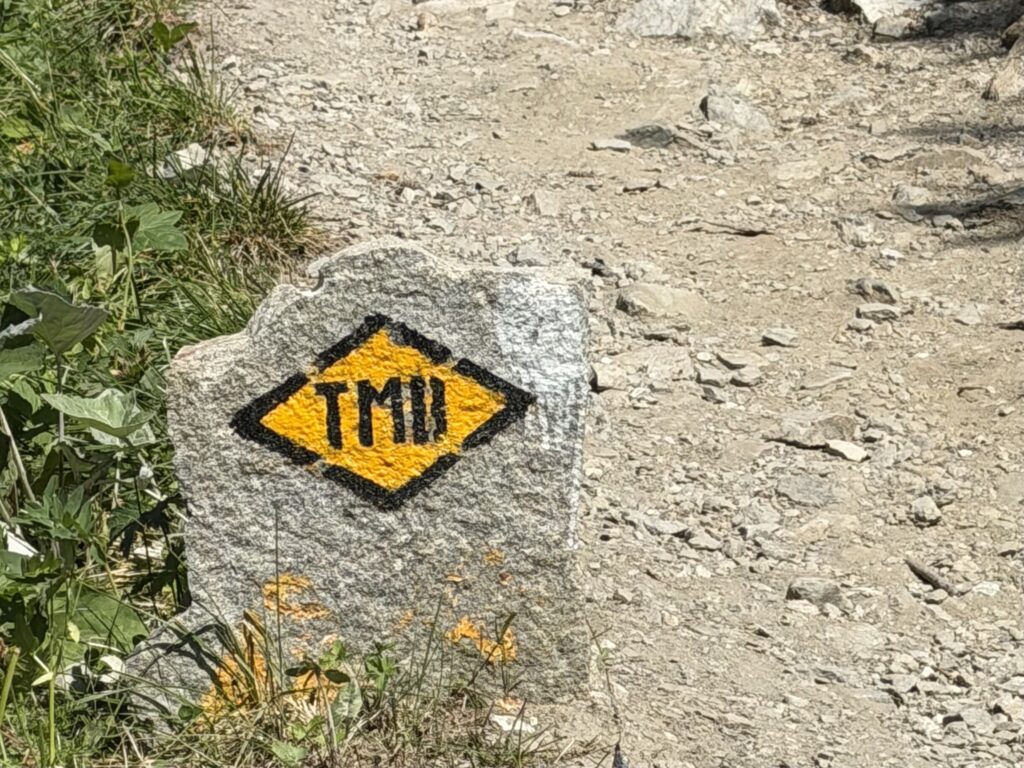
When you’re covering 20 to 30 miles and thousands of feet of elevation gain every day, everything you’re carrying has to earn its place in your pack.
My goal was to keep my Tour du Mont Blanc running kit as light as possible while still carrying the essentials I needed for safety and rapidly changing mountain weather.
My TMB Packing List
My Tour du Mont Blanc packing list included:
- Lightweight trail running vest
- Soft flasks, including two with built-in filters
- Waterproof rain jacket
- Warm layer
- Gloves
- Buff
- Headlamp
- GPS watch
- Phone
- Passport
- First-aid supplies
- Energy gels and snacks
- Electrolytes and salt tablets
- Trekking poles
I relied on villages and my overnight stops for food, water, and resupplying rather than trying to carry everything for four days.
And don’t forget your passport.
You’re literally running from France into Italy, then Switzerland, and finally back into France.
Best Time to Run the Tour du Mont Blanc
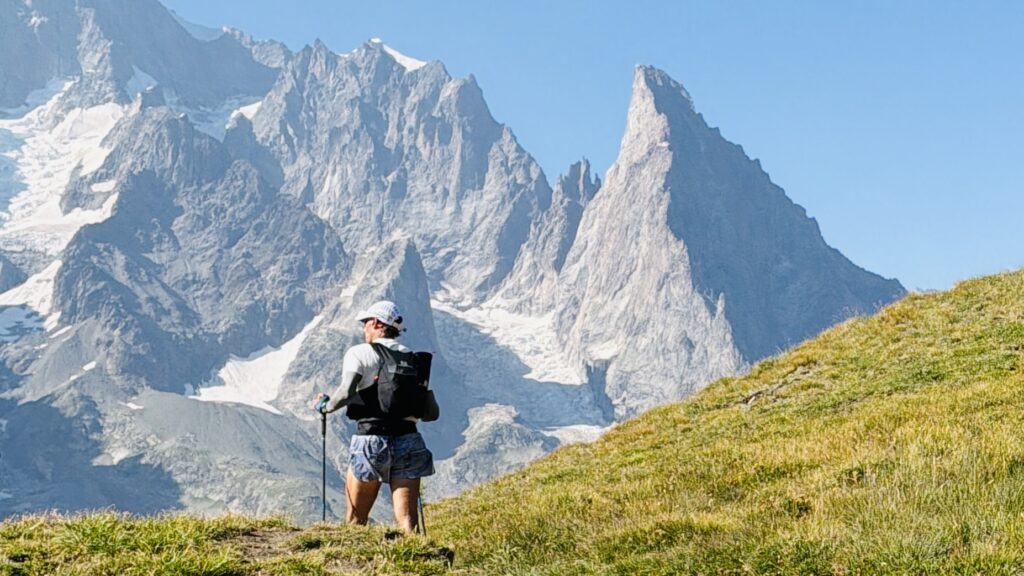
The main Tour du Mont Blanc hiking and trail running season is during the summer, when the high mountain passes are more likely to be free of snow.
The most popular window is generally:
- Late June
- July
- August
- Early September
Conditions in the Alps can vary significantly from year to year.
Snow can remain on high passes into summer, and mountain weather can change incredibly fast.
Don’t assume that because it’s July or August you’ll automatically have perfect conditions. Check current trail and weather conditions before leaving and carry the gear you need if things change.
My Tips for Running the Tour du Mont Blanc in 4 Days
Start Earlier Than You Think You Need To
I liked getting on the trail early.
It gave me more daylight to work with, cooler temperatures for some of the climbing, and quieter trails.
It also gave me some margin if the day took longer than expected.
And on the TMB, it often does.
Don’t Underestimate the TMB Elevation Gain
If you’re used to running marathons or ultramarathons on flatter terrain, don’t assume running 20 miles on the TMB will feel like a normal 20-mile training run.
It won’t.
The elevation gain and loss on the Tour du Mont Blanc are what make this route so demanding.
There are sustained climbs where running doesn’t make sense. I power-hiked those sections and ran the terrain where I could move efficiently.
Train for Back-to-Back Long Days
One long run isn’t the same as waking up the next morning and doing another one.
And then doing it again.
And again.
If you want to run the TMB in four days, training on tired legs is important. Back-to-back long runs, climbing, descending, and time on technical trails will prepare you much better than simply focusing on weekly mileage.
Don’t Neglect the Downhill Training
Everyone talks about the climbing on the Tour du Mont Blanc.
But the descents can beat you up too.
Running downhill for miles puts a completely different kind of stress on your legs. By the third and fourth day, I definitely felt all that descending.
If you’re training for a multi-day TMB run, don’t just train yourself to get up the mountain.
Train yourself to get back down it too.
Eat Before You’re Hungry and Drink Before You’re Thirsty
Don’t wait until you’re completely depleted to start thinking about nutrition and hydration.
I ate throughout the day and refilled water whenever I had a good opportunity.
Staying ahead of both made the long days much more manageable.
Pack as Light as You Safely Can
Every extra pound feels heavier after several thousand feet of climbing.
I wanted enough gear to handle changing mountain conditions without carrying things I didn’t actually need.
There’s a balance here.
Fast and light doesn’t mean being unprepared.
Book Your TMB Accommodations Early
The Tour du Mont Blanc is extremely popular during the summer, and both refuges and hotels can fill months in advance.
This becomes even more important when you’re trying to complete the TMB in four days because you need accommodations in very specific locations.
You don’t have much flexibility to stay another five or ten miles down the trail when you’re already covering 20 to 30 miles a day.
Download Your TMB Route and Offline Maps
The Tour du Mont Blanc is generally well marked, but I wouldn’t rely solely on trail signs.
I used GPS navigation and recommend having your TMB route and maps downloaded offline.
Batteries die. Weather rolls in. Signs get missed.
And being tired after ten hours on the trail doesn’t exactly improve your decision-making.
Can You Really Run the Tour du Mont Blanc in Four Days?

Yes.
But that doesn’t mean everyone should.
Running and hiking the Tour du Mont Blanc in four days means averaging roughly a marathon a day through serious mountain terrain while climbing thousands of vertical feet.
You should already be comfortable with:
- Long-distance trail running
- Steep climbs and descents
- Mountain weather
- Trail navigation
- Fueling during endurance events
- Back-to-back long days
- Being on your feet for many hours at a time
I have an ultrarunning background, and this was still a significant physical challenge.
If your goal is simply to experience the Tour du Mont Blanc, there’s absolutely nothing wrong with taking eight, nine, or ten days.
In fact, you’ll have a lot more time to stop at refuges, enjoy long lunches, explore villages, and take in the scenery.
But I wanted a different experience.
I wanted to see if I could move through these mountains efficiently and complete the entire route in four days.
And I loved it.
Was Running the Tour du Mont Blanc in Four Days Worth It?
Absolutely.
Would hiking the TMB over eight or ten days be an incredible experience?
I’m sure it would.
But running it gave me something different.
For four days, my life became incredibly simple.
Wake up. Eat. Run. Climb. Eat again. Keep moving. Find my bed. Sleep.
Then get up and do it all over again.
There was something pretty great about that.
I crossed three countries on foot. I watched the sun come up over the Alps. I ran beneath glaciers, through tiny mountain villages, past waterfalls and cow-filled meadows, and over mountain passes I’d spent years seeing in photos and videos.
And I learned that no matter how many ultramarathons you’ve done, a 30-mile mountain day can still make a bowl of spaghetti feel like the greatest meal you’ve ever eaten.
I’d wanted to run the Tour du Mont Blanc for years.
Now I can say I did it.
And I’d do it again.
Tour du Mont Blanc Running FAQs
How Long Is the Tour du Mont Blanc?
The classic Tour du Mont Blanc route is approximately 105 miles or 170 kilometers, although exact mileage varies depending on the route and trail variants you take.
How Much Elevation Gain Is on the Tour du Mont Blanc?
The complete TMB includes roughly 30,000 to 33,000 feet of elevation gain, depending on the exact route.
That’s why mileage alone doesn’t tell you how difficult the Tour du Mont Blanc is.
How Many Days Does It Take to Run the Tour du Mont Blanc?
That depends heavily on your fitness, mountain experience, and goals.
I completed my Tour du Mont Blanc run/hike in four days and three nights. Most people hiking the traditional TMB itinerary take approximately 8 to 11 days.
Can Beginners Run the Tour du Mont Blanc?
I wouldn’t recommend this four-day itinerary for a beginner.
You need to be comfortable covering 20 to 30 miles per day on mountainous terrain with significant elevation gain and loss.
Do You Have to Run the Entire TMB?
Definitely not.
I didn’t.
I ran runnable sections and power-hiked steep climbs. Trying to force yourself to run every climb isn’t necessarily the fastest or smartest way to cover this kind of terrain.
Can You Run the Tour du Mont Blanc Without a Guide?
I completed the Tour du Mont Blanc self-guided.
The route is well established, but I still recommend carrying GPS navigation and downloading offline maps before starting.
You should also be comfortable navigating independently in mountain terrain.
Can You Stay in Hotels Instead of Refuges on the TMB?
Yes, and that’s what I did.
I stayed in Les Contamines, Courmayeur, and Champex-Lac, which gave me a comfortable bed and shower every night and made it easier to eat, recover, and start early the following morning.
Hotels and Airbnbs cost more than many TMB refuges, but for this particular trip, the extra comfort and ability to carry less gear were worth it to me.
Is Water Easy to Find on the Tour du Mont Blanc?
I found many opportunities to refill water in villages and at natural water sources along the TMB.
I still recommend carrying enough water to safely reach your next known source and using a water filter for natural sources.
Availability can vary depending on weather, season, and trail conditions.
Can You Buy Food Along the Tour du Mont Blanc?
Yes.
One of the things I loved about the TMB was being able to stop in villages for food and drinks.
I carried gels, bars, candy, and other sports nutrition but supplemented that with pastries, Coke, sandwiches, pizza, and pasta along the route and at my overnight stops.
What Was the Hardest Part of Running the TMB?
For me, it wasn’t one individual climb.
It was the cumulative effect of the elevation and long days.
A big climb feels very different when you already have 50 or 70 miles in your legs.
Col du Bonhomme and Grand Col Ferret were both substantial climbs, but getting up on Day 4 knowing I had another 30-mile mountain day ahead of me was its own challenge.
Do You Need Trekking Poles for the Tour du Mont Blanc?
I found trekking poles helpful, especially on long, steep climbs.
Whether you use them is personal preference, but for a four-day TMB attempt, anything that helps me climb more efficiently and save my legs is worth considering.
Final Thoughts on Running the Tour du Mont Blanc in 4 Days
Running the Tour du Mont Blanc in four days was one of the best adventures I’ve ever done.
It was physically demanding, occasionally painful, and much harder than simply looking at “about 25 miles a day” on paper would suggest.
It was also spectacular.
If you’re an experienced trail runner or ultrarunner thinking about attempting a self-guided Tour du Mont Blanc run, my biggest advice is to respect the mountains, train for the elevation rather than just the mileage, keep your pack light, plan your overnight stops carefully, and give yourself enough time each day for the unexpected.
Eat the pastry.
Drink the Coke.
Stop and refill your flask with that freezing cold mountain water.
And don’t get so focused on your pace that you forget to look around.
Somewhere between Chamonix, Courmayeur, Champex-Lac, and Les Houches, I stopped thinking about how many miles I had left and realized I was finally running the trail I’d dreamed about for years.
That was the whole point.
If running the Tour du Mont Blanc is on your bucket list too, I hope this four-day TMB itinerary helps you start planning your own adventure.